

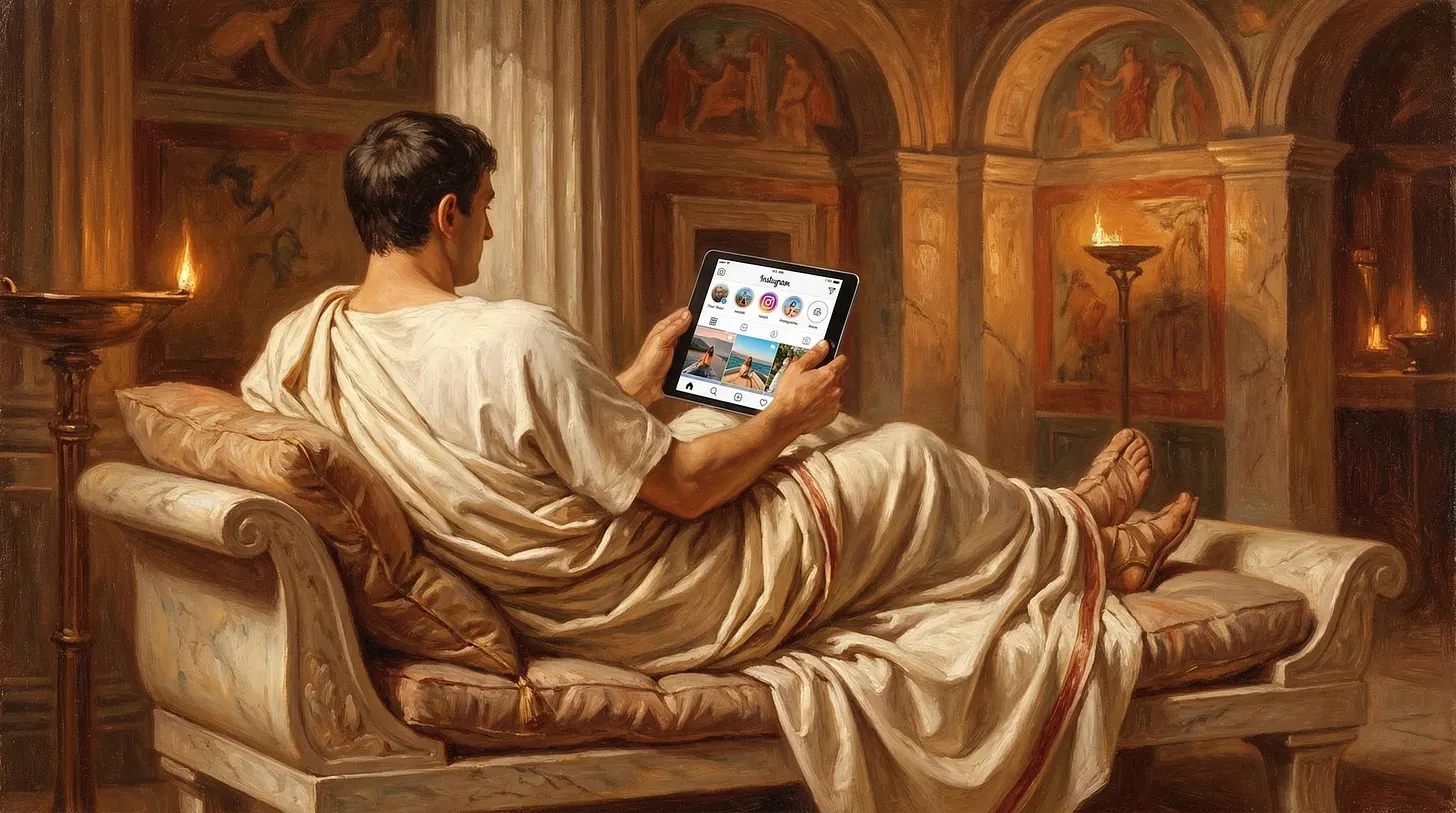
Instagram is one of the most uninstalled apps in the world.
Most people know it’s a problem. Most people can’t stop anyway.
For years, I was one of them.
Around an hour a day, sometimes more, scrolling with no real intention.
Consuming things I didn’t need. Feeling slightly worse afterward, every single time.
Here’s what I eventually understood: willpower was never going to fix this.
Not because I’m weak, but because the game wasn’t fair to begin with.
They use neuroscience to hook you. Willpower isn’t enough.
The engineers who built Instagram, TikTok, and YouTube Shorts didn’t stumble onto addiction by accident. They built it deliberately.
Engineered addiction.
Same mechanics as slot machines. Billion-dollar teams whose only job is to keep you opening the app.
Against that, “I’ll just be more disciplined” won’t cut it. I tried it.
And here’s the thing: needing to protect yourself from an app isn’t embarrassing.
Once I accepted that the problem wasn’t my willpower but an asymmetric war, building real defenses felt obvious.
So I stopped trying to out-discipline the algorithm.
Why I didn’t just delete it
Quitting entirely is the obvious answer. And if you’re purely a consumer on IG and never post, maybe that’s the right call.
For me it’s more complicated. I post on Instagram. I share things I care about.
And I’ve noticed something about showing up publicly: there’s something genuinely useful about it.
It pushes you to face being seen. It forces honesty. It builds a muscle worth building.
Creating on Instagram has value. Consuming it has almost none.
But it’s not free
Keeping Instagram has a real cost.
The more short-form content we consume, the harder it becomes to sit with something that takes longer than fifteen seconds.
Studies show it literally shrinks our attention span. Short-form content makes us dumber.
That’s a fact.
That’s also why most people can’t sit with a book for a few minutes. It’s not as stimulating as a f***ing IG reel or TikTok video.
And that’s a shame. Because books change lives. Reels don’t.
Scrolling through Instagram for an hour won’t make us a better person, grow our business, or bring us closer to the life we actually want.
It’s just more noise on top of the noise we already have.
What I tried before
Deleting the app: reinstalled within three days.
Willpower commitments: lasted about a week.
None of it touched the actual problem. The reflex.
That moment when you finish a task, or avoid starting one, and your hand reaches for your phone before any decision happens.
It’s not a choice. It’s a loop running on autopilot.
To break a reflex, you don’t fight it.
You interrupt it.
The fix: ScreenZen
ScreenZen is a mobile app available on iPhone and Android. It’s free.
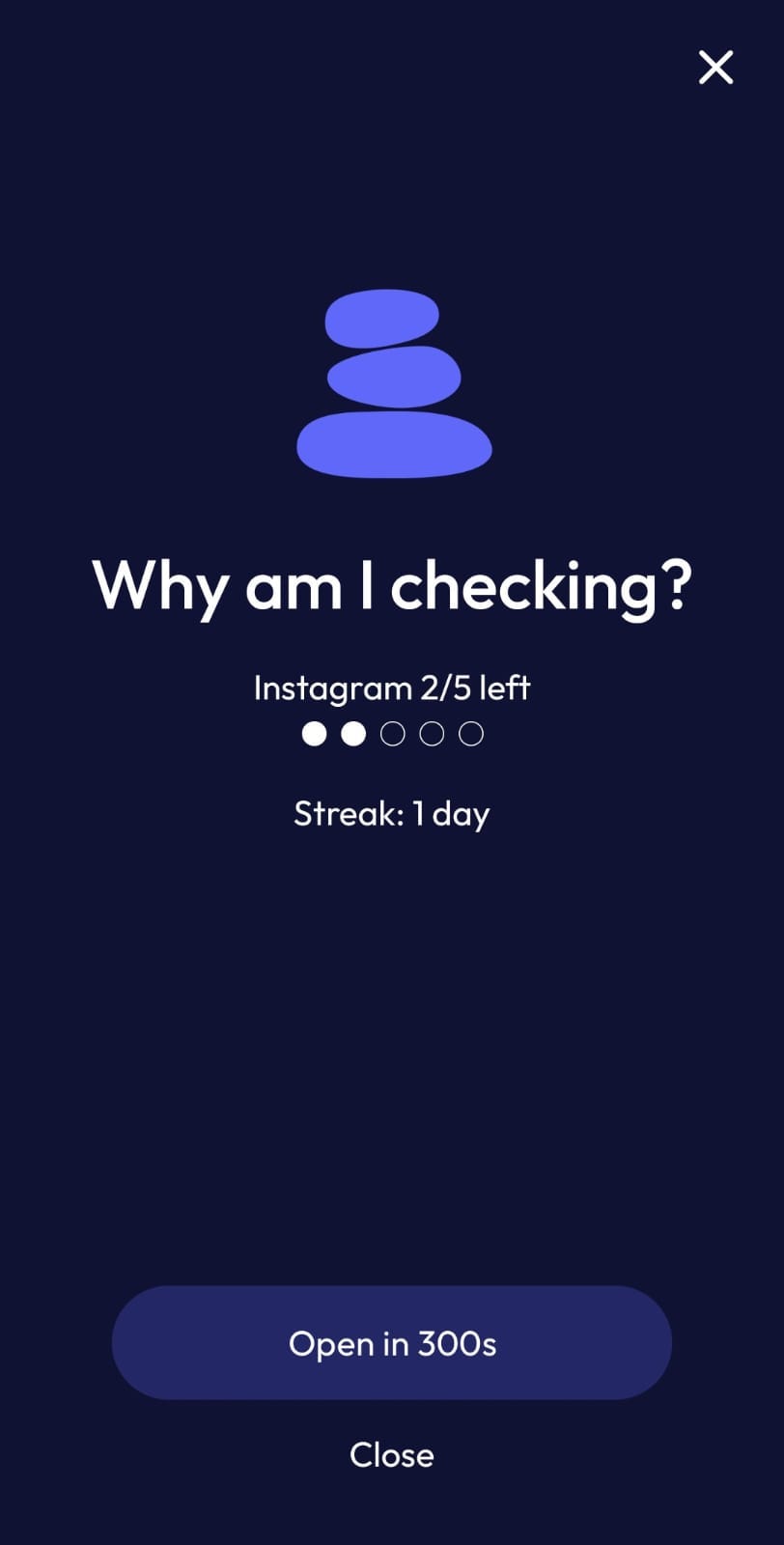
It does one thing: it adds a mandatory delay before you can open any app you designate as distracting.
No points, no rewards, no complicated system.
Just friction.
You pick the apps, you set the delay, and every time you try to open one, you wait.
That’s the whole thing. But you need the right settings.
(This post is not sponsored or whatever. They don’t know I exist.)
Thanks for reading The Inner Code. Subscribe for free to receive new posts.
The ScreenZen settings that work for me
After a few weeks of tweaking, here’s the exact setup.
Delay: 5 minutes
I tried one minute and two minutes first. I’d just wait them out.
Five minutes is different. You tap the app, ScreenZen intercepts with a message you can set yourself (”Why am I checking?” for instance), and the countdown starts.
You don’t have to stand there waiting. Put your phone down, do something else, come back when it’s done.
Session length: 5 minutes
Once the delay clears, I get 5 minutes of actual access. Then it re-blocks. Back in? Another 5-minute wait.
Apps I block
Instagram, YouTube Shorts. I don’t have TikTok. You can apply this to whatever app you want.
One thing most people miss: lock your ScreenZen settings
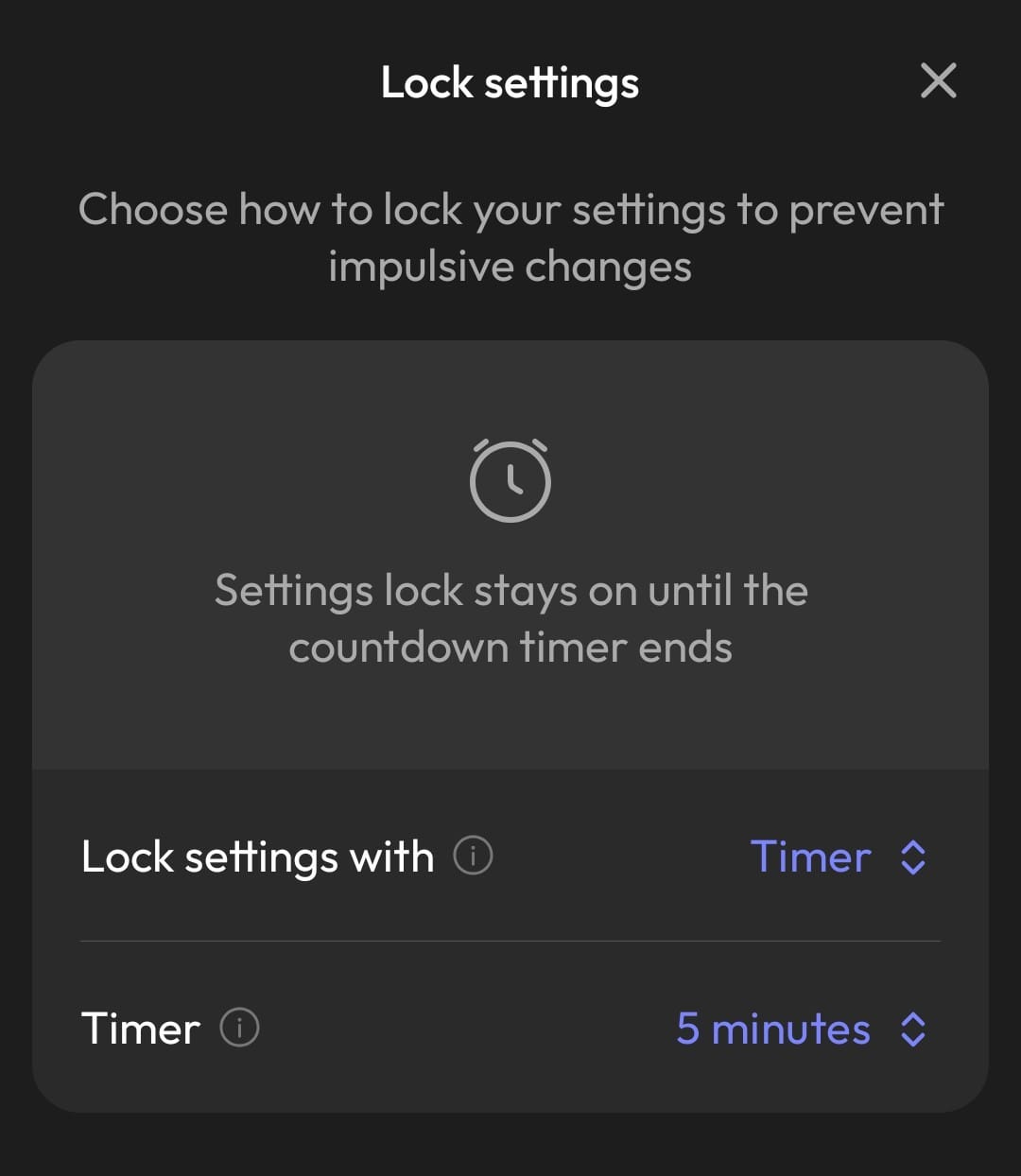
Otherwise you can just open ScreenZen and disable everything whenever the urge hits. There’s a setting that puts a timer on accessing the settings themselves. I set mine to 5 minutes. Same friction, same logic.
This small change gave me six hours a week
I went from an hour on Instagram per day to around 10 minutes. That’s 50 minutes back every single day.
350 minutes a week. Nearly six hours. Every week.
The math, when you actually write it out, is offensive.
Most of that time went into reading. Right now I’m averaging 45 minutes of reading per day.
And here’s what I noticed: the feeling after reading for 45 minutes is completely different from the feeling after scrolling Instagram for the same Ok namount of time.
After reading, I feel satisfied. Proud, even. After Instagram, I just feel a bit empty.
That difference alone was worth the whole thing.
If your problem is the same as mine was, the solution probably isn’t more discipline. It’s more friction.
Happy reading?